India grows some of the world’s most distinctive coffee. For most of its history, Indians rarely tasted it. The beans went abroad, the profits went to exporters, and the domestic market ran on instant mixes and chicory blends that had more to do with convenience than craft. Blue Tokai looked at that gap and saw not just a business opportunity but a cultural one. What followed wasn’t simply the launch of a specialty coffee brand. It was a slow, careful renegotiation of what coffee could mean in India.
The Problem It Was Actually Solving
When Blue Tokai launched in 2013, specialty coffee in India existed but barely. It lived in small roasting units, hobbyist forums, and the occasional café that catered to returned expats or coffee professionals. The broader urban consumer had two real options: the familiarity of instant coffee at home, or the lifestyle of Café Coffee Day and Starbucks, which sold an experience more than a cup.
Neither option addressed something that founders Matt Chitharanjan and Namrata Asthana kept encountering on visits to Indian coffee estates: the beans being grown in Coorg, Chikmagalur, and the Nilgiris were genuinely exceptional, and almost none of it was reaching Indian consumers in any form that honoured that quality.
The founding insight was precise. India didn’t have a coffee quality problem. It had a cultural translation problem. The infrastructure to grow great coffee existed. What didn’t exist was a brand capable of making that quality legible, accessible, and desirable to an urban Indian consumer who had never been given a reason to think about coffee as anything other than a morning ritual or a social occasion.
What Made the Timing Right
Blue Tokai’s rise cannot be separated from a broader shift in how young urban Indians were beginning to relate to consumption.
A generation shaped by global travel, food media, and Instagram was developing an appetite for provenance. Where something came from, how it was made, and who made it were becoming meaningful purchase considerations in categories that had previously been purely functional. This was happening in craft beer, in artisanal food, in independent fashion. Coffee was ready for the same transition.
Blue Tokai arrived early enough to shape the conversation rather than join it. By the time specialty coffee became a recognisable category in Indian cities, Blue Tokai already had the farm relationships, the roasting infrastructure, and the brand language to position itself as the authority rather than a participant. First mover advantage in a category defined by expertise and trust is particularly durable, because the brands that educate a market tend to own it.
Transparency as the Central Brand Idea
Most food and beverage brands in India at the time competed on taste, price, or emotional association. Blue Tokai competed on information.
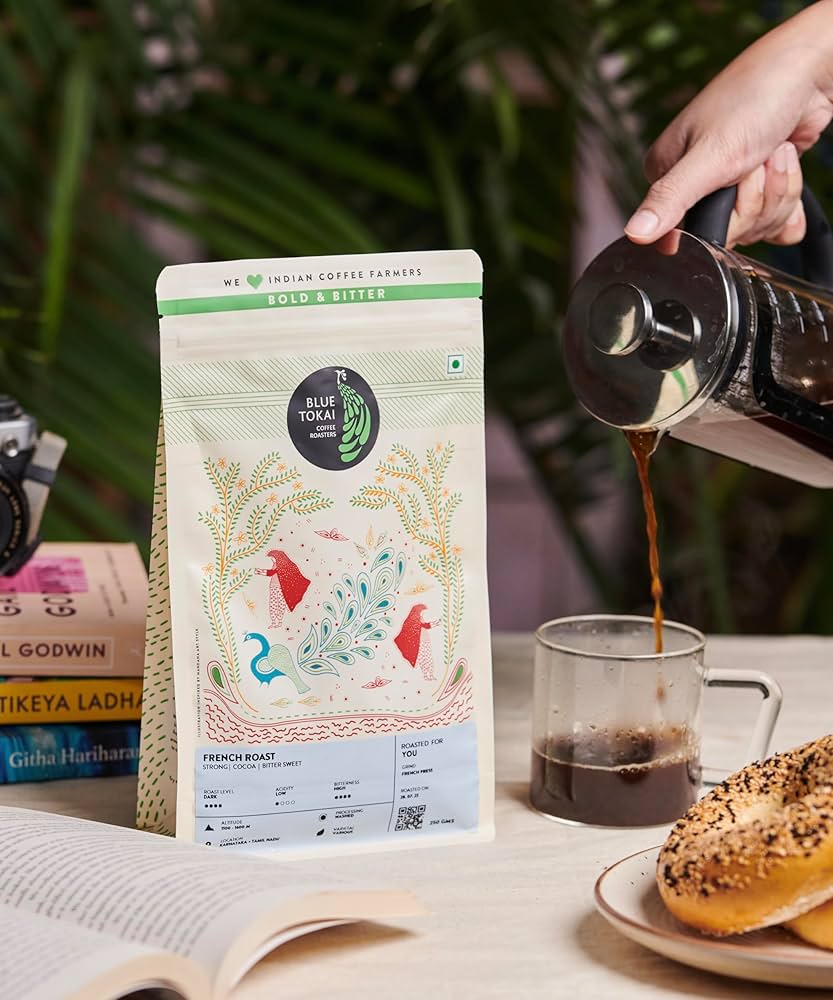
Roast dates. Estate names. Processing methods. Tasting notes. Altitude and varietal details on the packaging. These weren’t just product descriptors. They were a signal to consumers that this brand had nothing to hide and everything to explain. In a market accustomed to instant coffee marketed through warmth and family imagery, that level of transparency was startling in the best possible way.
This approach did something strategically important. It turned the consumer into a participant rather than a passive buyer. Learning to distinguish a washed Coorg bean from a natural-processed Nilgiris lot, understanding why roast date matters, developing a preference between filter and pour-over — all of these are small investments that deepen loyalty in ways that price promotions or loyalty programmes never could. Blue Tokai didn’t just sell coffee. It gave consumers a new way to be interested in something.
The Aesthetic That Made Craft Feel Calm
Specialty coffee globally has a presentation problem. It frequently tips into intimidation — the chalkboard menus with sixteen variables, the barista who corrects your pronunciation, the atmosphere that rewards knowledge and subtly punishes its absence.
Blue Tokai made a deliberate choice to go the other direction. The cafés are warm, uncluttered, and unhurried. The packaging uses earth tones, clean typography, and matte textures that feel considered without feeling precious. The peacock tail mark is elegant and distinctly Indian without being decorative in the way that “heritage” branding often becomes. The overall aesthetic says: this is serious coffee, and you are welcome here regardless of how much you already know.
That tonal decision is a significant strategic one. It defined Blue Tokai’s competitive position against Third Wave Coffee Roasters and other specialty players who skew younger and more urban-trend-conscious. Blue Tokai feels warmer, more grounded, and more patient. That personality attracts a wider spectrum of consumers, from the curious beginner to the experienced home brewer, without alienating either.
Building an Ecosystem, Not Just a Café Chain
What distinguishes Blue Tokai’s growth strategy from most café brands is its refusal to be only one thing.
Cafés, a roastery network, an online store, subscriptions, retail presence in supermarkets, workshops, equipment sales, collaborations with hotels and restaurants — this multi-channel architecture means Blue Tokai touches consumers across a range of lifestyle moments rather than a single occasion. The morning subscription reaches a consumer at home. The café catches them mid-morning. The supermarket shelf intercepts them on a weekend grocery run.
This matters because it turns coffee from a category purchase into a brand relationship. Consumers don’t just visit Blue Tokai. They live inside its ecosystem across different parts of their week.
Where the Strategy Has Limits
Blue Tokai’s positioning carries real constraints worth acknowledging.
The price point that reflects genuine quality and ethical sourcing also limits penetration beyond urban, upper-middle-class consumers. India’s coffee drinking population is vast, but the segment willing and able to pay a premium for single-origin transparency is still relatively concentrated in a handful of cities. Scaling without diluting the brand’s core values is a tension the company will face increasingly as it grows.
The competitive landscape is also closing. Third Wave Coffee, Subko, and a growing number of well-capitalised regional roasters are competing for the same informed consumer. First mover advantage is durable but not permanent, particularly in a category where product quality is increasingly table stakes. Blue Tokai’s long-term moat will depend on whether its farm relationships, its community of loyal consumers, and its role as the brand that educated the category are enough to hold the centre as the market matures.
What This Case Study Actually Teaches
Blue Tokai is an instructive example of what happens when a brand identifies a genuine cultural gap rather than a product gap and builds patiently into it.
The coffee was always there. The farms were always there. What was missing was a brand with the clarity to translate that quality into something a urban Indian consumer could understand, desire, and incorporate into their daily life. Blue Tokai provided that translation, and in doing so, didn’t just build a successful business. It created the category it now leads.
The strategic lesson is about sequencing. Blue Tokai educated before it scaled, built credibility before it expanded, and established what specialty coffee meant in India before competitors could define it differently. That patience is harder to execute than it looks, and rarer than it should be.