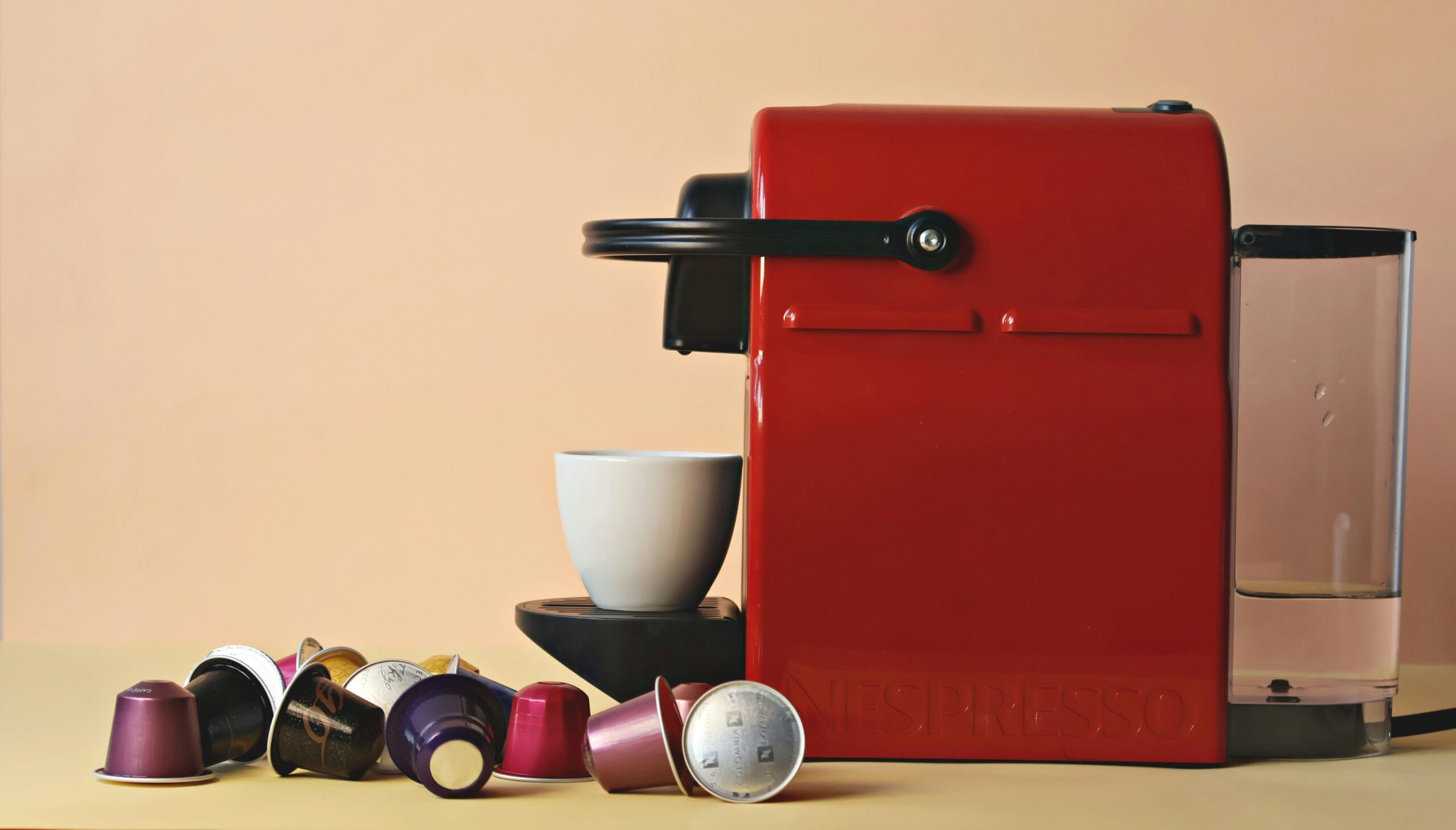
Luxury usually requires a story. A vineyard with a history. A craftsman with a method. A material with a provenance. Nespresso offers none of these things. It sells pre-portioned aluminium capsules and a machine that requires no skill to operate. And yet, for decades, it has occupied a position in consumer culture that most genuinely artisanal brands would envy. Understanding how that happened is one of the more instructive exercises in modern brand strategy.
The Cultural Gap It Walked Into
Nespresso launched into a moment of genuine cultural transition. Coffee was shifting from a functional beverage into a lifestyle signal. Starbucks was socialising it through community spaces. Third wave coffee was intellectualising it through craft, origin stories, and the language of connoisseurship. Both movements required something from the consumer — time, knowledge, or at minimum, the willingness to queue.
Nespresso identified the gap between these two worlds. There was a consumer who wanted the emotional reward of sophistication without the effort it traditionally demanded. Someone design-conscious, aesthetically discerning, time-poor, and unwilling to compromise on the feeling of quality even if they had no particular interest in acquiring expertise.
The brand’s founding proposition was quietly radical: refinement should not require knowledge. It should be available at the press of a button, in your own kitchen, on a Tuesday morning. That idea carved out a territory that neither Starbucks nor specialty coffee could occupy, and Nespresso has defended it ever since.
Symbols Doing the Work of Substance
What makes Nespresso strategically fascinating is how completely it operates through symbols rather than substance.
The capsules are the clearest example. Objectively, they are single-use aluminium pods containing pre-ground coffee. Experientially, they function as something closer to a curated selection, colour-coded by intensity and flavour profile, displayed in boutiques like a jeweller’s colour swatch. The act of choosing a capsule is designed to feel like an act of discernment rather than a purchase decision. The language around them borrows from wine and perfumery. The names evoke terroir and atmosphere. None of this changes what is inside the capsule. All of it changes how the consumer feels about choosing it.
The crema works the same way. Technically it is a layer of emulsified oils produced by pressurised extraction. Semiotically it is proof. It is the visible confirmation that what you have made in your kitchen has achieved café status. Consumers who cannot explain the chemistry recognise immediately that it signals quality. Nespresso understood this and built its entire value proposition around delivering that signal consistently, regardless of the machine or the capsule chosen.
The boutiques complete the system. They are designed to look and feel like luxury cosmetics or fragrance stores. Machines sit on pedestals. Capsules are displayed with the considered lighting of a jewellery case. Staff offer tastings in small, delicate cups. The retail environment doesn’t sell coffee. It confers membership in a particular kind of consumer identity, one defined by taste, restraint, and an appreciation for the well-designed object.
The Belief System Underneath
Every element of Nespresso’s brand rests on a single underlying idea: that small everyday rituals deserve to feel elevated.
This is a more sophisticated proposition than it first appears. It doesn’t ask consumers to reorganise their lives around luxury. It tells them that the life they already have, the morning routine, the afternoon break, the quiet moment before the day begins, is worth treating with care. Nespresso inserts itself into the micro-moments of daily life and reframes them as opportunities for a kind of low-stakes connoisseurship.
This is why the brand’s archetype is closer to the refined hedonist than the aspirational striver. It doesn’t promise transformation or social elevation in any dramatic sense. It promises that the ordinary can feel quietly extraordinary. That promise is both emotionally resonant and strategically precise, because it sidesteps the comparison to craft coffee entirely. Nespresso is not competing on authenticity. It is competing on atmosphere.
Where the Strategy Gets Complicated
Nespresso’s brand risks are a direct consequence of its strengths, which makes them worth examining honestly.
The entire system depends on a closed loop: proprietary capsules, proprietary machines, a controlled retail experience. This gave Nespresso extraordinary brand coherence in its early decades. It also made the brand structurally resistant to the transparency and origin narratives that have become increasingly important cultural currency in food and beverage. Third wave coffee built its authority on knowing where beans came from, who grew them, and how they were processed. Nespresso’s controlled system makes that kind of storytelling almost impossible to credibly adopt.
The sustainability tension compounds this. Aluminium capsules, however recyclable in theory, carry a significant perception problem in a consumer culture that is increasingly attentive to packaging waste. The brand that built its identity on effortless refinement now has to work against the association of that effortlessness with environmental cost. These are not insurmountable problems, but they require the brand to evolve cultural codes it has spent thirty years carefully constructing.
The deeper risk is commodification. What felt exclusive in 2000 is now widely accessible and widely imitated. Maintaining the aura of sophistication becomes progressively harder as at-home espresso culture matures and competitors close the quality and design gap. Nespresso must keep finding ways to make the familiar feel considered, which is exactly the problem luxury brands face when they scale.
What This Case Study Actually Teaches
Nespresso is a masterclass in the power of semiotic precision. The brand never had a craft story, an origin narrative, or a transparency advantage. What it had was an exceptionally clear understanding of which symbols communicate sophistication to its target consumer, and the discipline to deploy those symbols consistently across every touchpoint.
The capsule, the crema, the boutique, the tone of voice — none of these are accidental. Each one is doing specific cultural work, translating an otherwise ordinary product interaction into something that feels meaningful, personal, and quietly aspirational.
The lesson for brand strategy is not that authenticity doesn’t matter. It’s that consumers don’t always experience authenticity directly. They experience the symbols of it. Nespresso understood that distinction earlier and more precisely than almost any brand in its category, and built a business worth billions on the gap between the two.